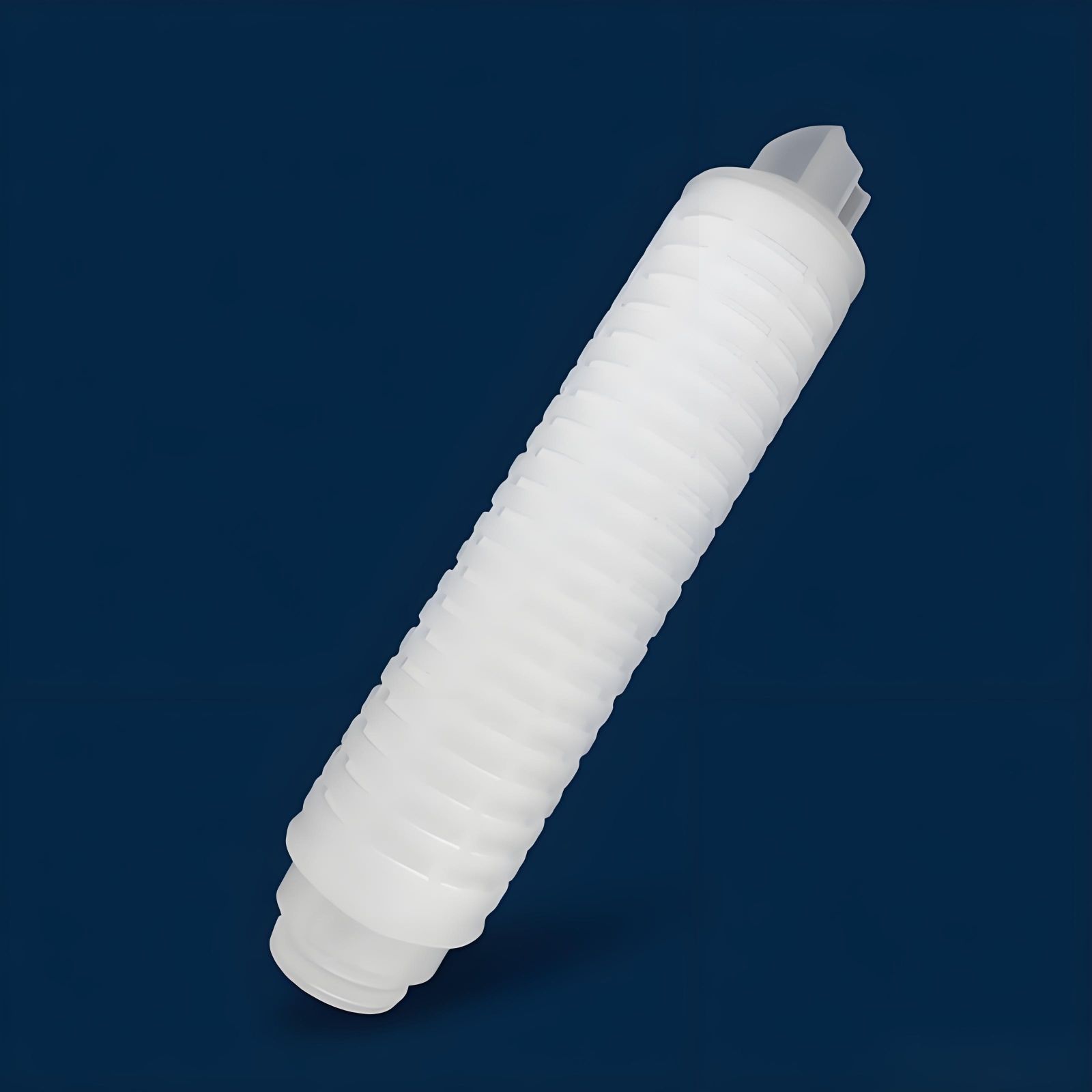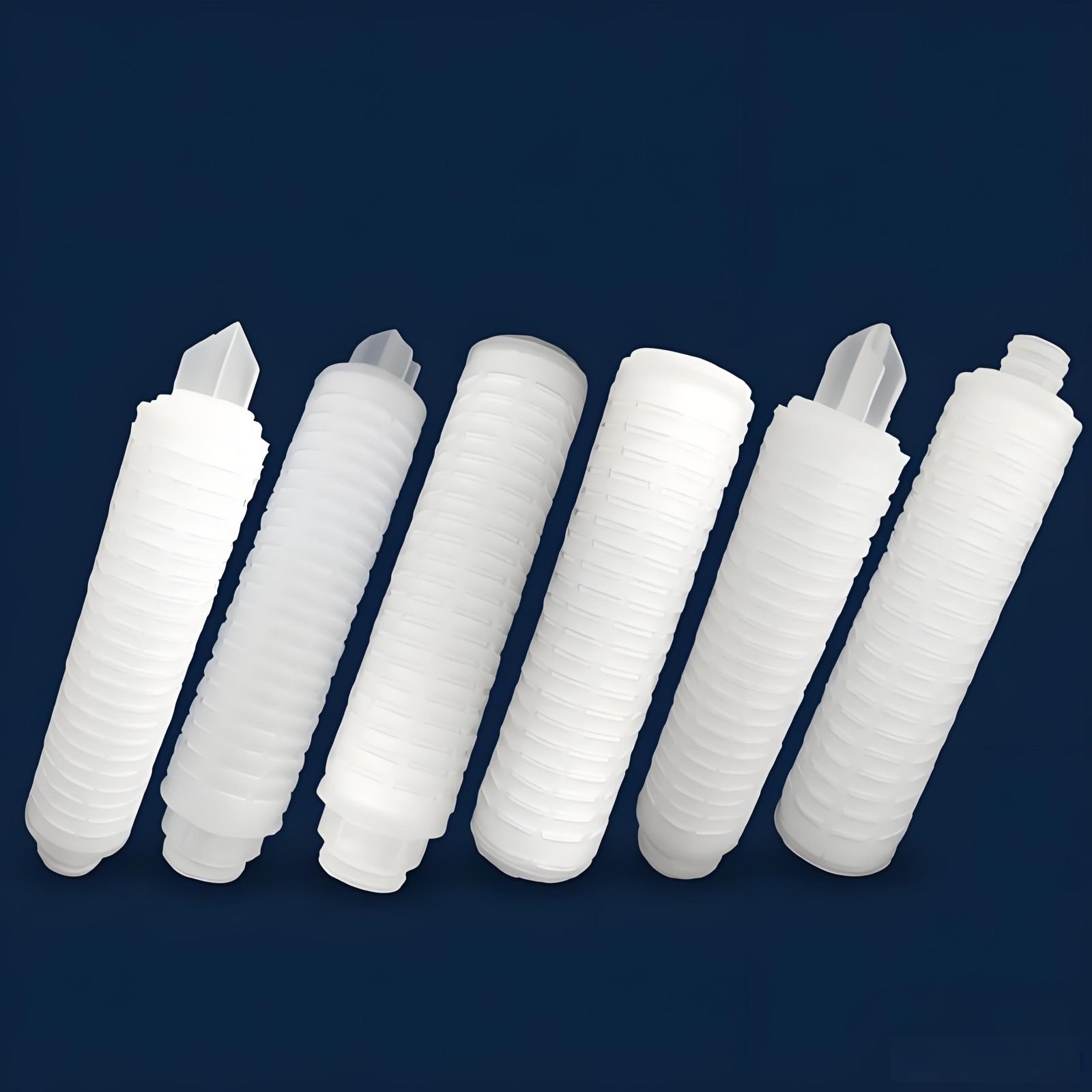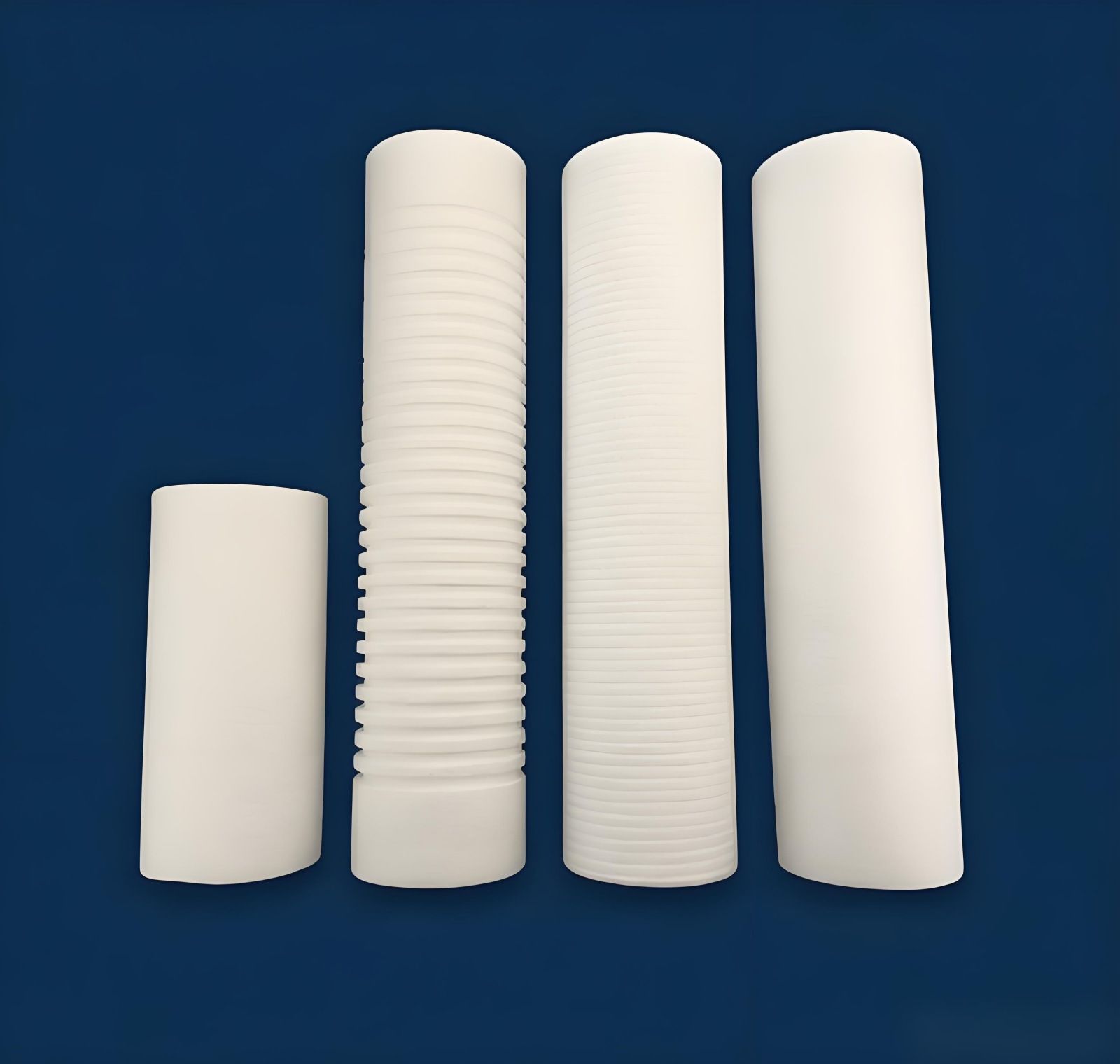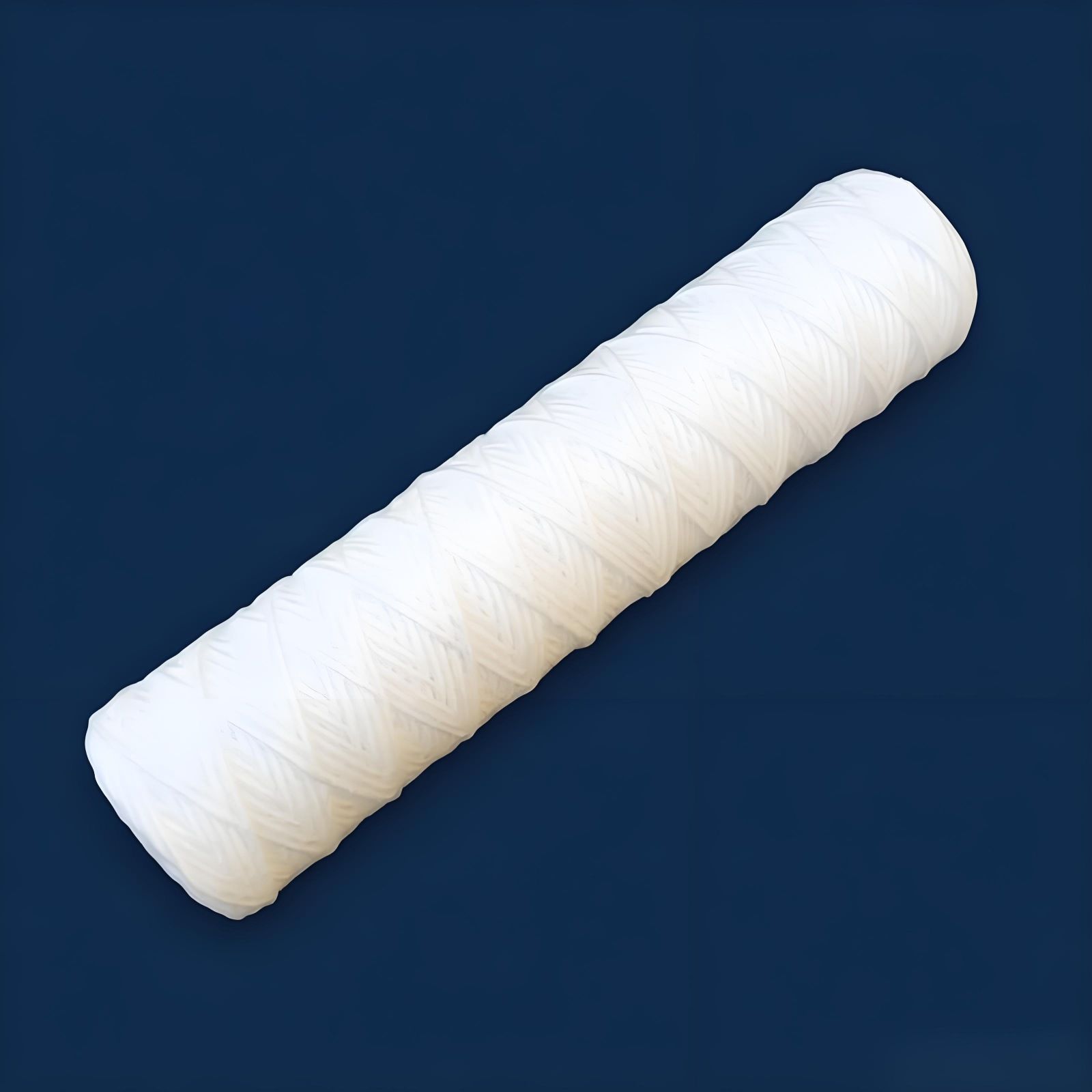

| Type | String Wound Depth Filter |
| Material | Polypropylene (PP Cotton) |
| Application | Domestic & commercial water purification, RO membrane pre-filtration, food & beverage processing, pharmaceutical production, chemical liquid filtration, electroplating solution filtration, industrial water treatment |
The String Wound Filter Cartridge is manufactured by precisely winding polypropylene fibers around a rigid central core in a diamond cross-hatch pattern. The controlled winding technique creates a gradient density structure with looser layers on the outside and progressively tighter layers toward the center, delivering true depth filtration that captures particles of varying sizes throughout the entire filter wall.
This construction provides excellent dirt-holding capacity and long service life while maintaining low pressure drop. The polypropylene material is chemically inert, containing no binders or adhesives, and offers broad compatibility with acids, alkalis, and most organic solvents across a pH range of 1 to 13.
| Type | String Wound Depth Filter |
| Material | Polypropylene (PP Cotton) |
| Application | Domestic & commercial water purification, RO membrane pre-filtration, food & beverage processing, pharmaceutical production, chemical liquid filtration, electroplating solution filtration, industrial water treatment |
A string wound filter cartridge is a type of water filtration device that consists of a fiber, usually a synthetic material like polyester or polypropylene, which is wound in a specific pattern around a central core. This design creates a progressive filtration system, where larger particles are trapped on the outer layers, and smaller particles are captured as the water moves through the fibers towards the center. They are commonly used for pre-filtration to protect downstream equipment and improve the water quality by removing sediment, sand, and other particulate matter.
Selecting the right micron rating for a string wound filter cartridge depends on the specific contaminants you are trying to remove from your water. For general purpose filtration, such as removing larger particulates and sediment, a 50-micron or 100-micron cartridge is often sufficient. For finer filtration, like removing smaller particles and some bacteria, a 5-micron or 1-micron cartridge might be necessary. It's important to consider the size of the particles in your water and the requirements of the systems downstream, as a finer micron rating will provide better filtration but may also clog more quickly, requiring more frequent replacement.
String wound filter cartridges are generally not recommended for cleaning and reuse due to their design and the nature of the materials they are made from. The fibers can trap a significant amount of contaminants, and attempting to clean them can damage the structure, reducing their effectiveness. Additionally, some contaminants can be difficult to remove completely, which may lead to bacterial growth or recontamination of the water. For the best performance and safety, it is advisable to replace string wound filter cartridges regularly according to the manufacturer's recommendations.
The lifespan of a string wound filter cartridge can vary depending on several factors, including the water quality, flow rate, and the specific application. In general, these cartridges can last from a few weeks to several months before they need to be replaced. Higher levels of sediment or particulates in the water can cause the cartridge to clog more quickly, reducing its lifespan. Regular monitoring of pressure drop across the cartridge can help determine when it needs to be replaced. Typically, a pressure drop of 5-10 PSI indicates that the cartridge should be changed to maintain optimal efficiency.
String wound filter cartridges are not specifically designed for removing chlorine from water. They are primarily used for mechanical filtration, which means they are effective at removing particulate matter such as sediment, sand, and rust. For chlorine removal, other types of filters are more suitable, such as activated carbon filters. Activated carbon filters can adsorb chlorine and other chemicals, providing both taste and odor improvement as well as better chemical filtration. If you need to remove both particulates and chlorine, consider using a combination of a string wound filter cartridge followed by an activated carbon filter.
© 2026 Torvexus. All Rights Reserved.