
Efficient Landfill Leachate Treatment Through DTRO Membrane Technology: Achieving Zero Liquid Discharge and Wastewater Reuse
Introduction
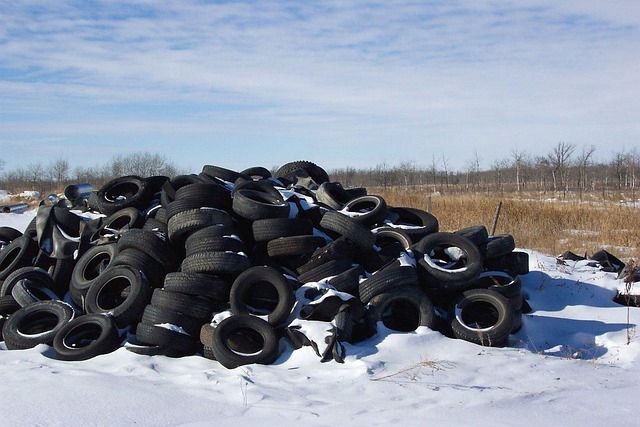
Landfill leachate, a highly contaminated liquid that forms as water passes through the waste in landfills, poses significant environmental and health risks. Effective wastewater treatment is crucial to mitigate these risks and ensure compliance with stringent regulatory standards. Disposal of landfill leachate often requires advanced treatment methods that can handle its complex and varying composition. One such method that has gained prominence is the use of Disc Tube Reverse Osmosis (DTRO) membrane technology. This article explores the application of DTRO in landfill leachate treatment, its advantages, and how it contributes to zero liquid discharge (ZLD) and water reuse practices.
Understanding Landfill Leachate
Landfill leachate is a byproduct of the refuse decomposition process in landfills. It contains a wide range of contaminants, including heavy metals, organic compounds, and nutrients, which can pollute groundwater, surface water, and soil if not properly managed. The composition of landfill leachate can vary significantly depending on factors such as the age of the landfill, the type of waste, and environmental conditions. Traditional treatment methods often fall short in addressing the diverse and complex nature of these contaminants, making advanced technologies like DTRO essential.
Overview of DTRO Membrane Technology
What is DTRO?
DTRO, or Disc Tube Reverse Osmosis, is a specialized membrane technology designed to treat high-strength industrial wastewater, including landfill leachate. Unlike conventional spiral-wound RO membranes, DTRO systems use a unique disc tube design that reduces fouling and allows for the treatment of highly contaminated water. This design features a central tube with several flat sheets or discs, creating a pathway for water to flow through the membrane while leaving contaminants behind.
How DTRO Works
The DTRO process involves several stages:
- Pre-treatment: The leachate is first pre-treated to remove large particles and adjust pH levels if necessary.
- Reverse Osmosis: The pre-treated leachate is then passed through the DTRO membranes under high pressure. The membranes allow water molecules to pass through while retaining dissolved solids, organic matter, and other contaminants.
- Post-treatment: The permeate (treated water) can be further processed if needed for specific reuse applications, such as irrigation or industrial processes. The concentrate (retained contaminants) is typically managed through evaporation, crystallization, or other advanced treatment methods to achieve ZLD.
Advantages of DTRO in Landfill Leachate Treatment
High Efficiency in Contaminant Removal
DTRO membranes are highly effective in removing a broad spectrum of contaminants from landfill leachate. They can achieve removal rates of over 90% for many organic compounds, heavy metals, and nutrients, making them an ideal choice for treating highly polluted water. The robust design of DTRO systems ensures consistent performance even in the presence of high concentrations of solids and organic matter.
Reduced Fouling and Longer Membrane Lifespan
Fouling, the accumulation of contaminants on the membrane surface, is a common issue in wastewater treatment that can reduce efficiency and increase maintenance costs. The unique disc tube design of DTRO systems minimizes fouling by providing a larger surface area for water to flow through and by facilitating easier cleaning. This results in longer membrane lifespan and reduced operational costs.
Compact and Flexible Design
DTRO systems are relatively compact and can be easily integrated into existing treatment facilities. They are also flexible in terms of capacity, allowing for scalable solutions that can adapt to changes in leachate volume and composition. This makes DTRO technology suitable for both large and small landfill sites.
Applications and Case Studies
Zero Liquid Discharge (ZLD) Systems
ZLD systems aim to eliminate the discharge of liquid waste by maximizing water recovery and converting the remaining concentrate into solid waste. DTRO technology is a critical component of ZLD systems due to its high efficiency in water purification and contaminant removal. By integrating DTRO with additional processes such as evaporation and crystallization, it is possible to achieve a near-zero discharge of liquid waste, greatly reducing environmental impact.
Industrial Wastewater Treatment
DTRO is not limited to landfill leachate treatment; it is also widely used in the treatment of industrial wastewater. Industries such as mining, chemical, and textile generate wastewater with high concentrations of contaminants, similar to landfill leachate. DTRO systems can effectively purify this wastewater, ensuring compliance with environmental regulations and enabling water reuse in industrial processes. This reduces the overall water consumption and operational costs for these industries.
Case Study: Successful DTRO Implementation in a Municipal Landfill
A municipal landfill in Europe faced significant challenges in managing its leachate, which was highly contaminated with heavy metals and organic compounds. Traditional treatment methods were ineffective, and the landfill was at risk of non-compliance with environmental regulations. By implementing a DTRO system, the landfill was able to achieve high-quality permeate and significantly reduce the volume of concentrate. The ZLD approach, combining DTRO with evaporation and crystallization, allowed the landfill to eliminate liquid waste entirely. This not only improved environmental outcomes but also reduced operational costs and enhanced the landfill's reputation in the community.
Challenges and Solutions in DTRO Application
Initial Investment Costs
While DTRO technology offers numerous benefits, the initial investment can be higher compared to traditional treatment methods. However, the long-term cost savings from reduced maintenance and operational costs, as well as the environmental benefits, often outweigh the initial expenses. Financial incentives and grants for environmentally friendly technologies can also help offset the initial investment.
Energy Consumption
DTRO systems require high pressure to force water through the membranes, which can lead to increased energy consumption. To address this, many systems incorporate energy recovery devices that capture and reuse the energy from the concentrate stream, reducing overall energy usage. Additionally, advancements in membrane technology are continually improving energy efficiency.
Management of Concentrate
The concentrate produced by DTRO systems can be challenging to manage. However, by integrating DTRO with ZLD processes, the concentrate can be further treated and converted into solid waste. This solid waste can then be disposed of more safely and economically. Advanced treatment methods, such as advanced oxidation processes (AOPs) and electrocoagulation, can also be used to further reduce the volume and toxicity of the concentrate.
Future Trends in DTRO Technology
Advancements in Membrane Materials
Ongoing research and development in membrane materials are leading to more durable and efficient membranes. New materials with enhanced chemical resistance and lower fouling tendencies are being introduced, further improving the performance of DTRO systems. These advancements will make DTRO technology even more suitable for treating highly contaminated industrial and landfill leachate.
Integration with Other Treatment Methods
The future of DTRO technology lies in its integration with other advanced wastewater treatment methods. Combining DTRO with biological treatment, chemical precipitation, and advanced filtration techniques can create highly effective and cost-efficient treatment systems. This integrated approach not only maximizes contaminant removal but also optimizes water reuse, making it a sustainable solution for wastewater management.
Regulatory Compliance and Environmental Stewardship
As environmental regulations become more stringent, the demand for advanced wastewater treatment technologies like DTRO will continue to grow. Landfill operators and industrial facilities are under increasing pressure to adopt methods that ensure compliance and demonstrate environmental responsibility. DTRO technology, with its high efficiency and ZLD capabilities, is well-positioned to meet these demands and contribute to a cleaner, more sustainable future.
Conclusion
DTRO membrane technology offers a robust and efficient solution for the treatment of landfill leachate and industrial wastewater. Its ability to achieve high contaminant removal rates, reduce fouling, and integrate with ZLD systems makes it an invaluable tool in environmental management. Despite initial investment costs and energy consumption challenges, the long-term benefits, including reduced operational costs and improved environmental outcomes, make DTRO a compelling choice for both landfill operators and industrial facilities. As technology continues to advance, the integration of DTRO with other treatment methods will further enhance its effectiveness and sustainability, paving the way for a future where liquid waste is minimized and water resources are maximized.