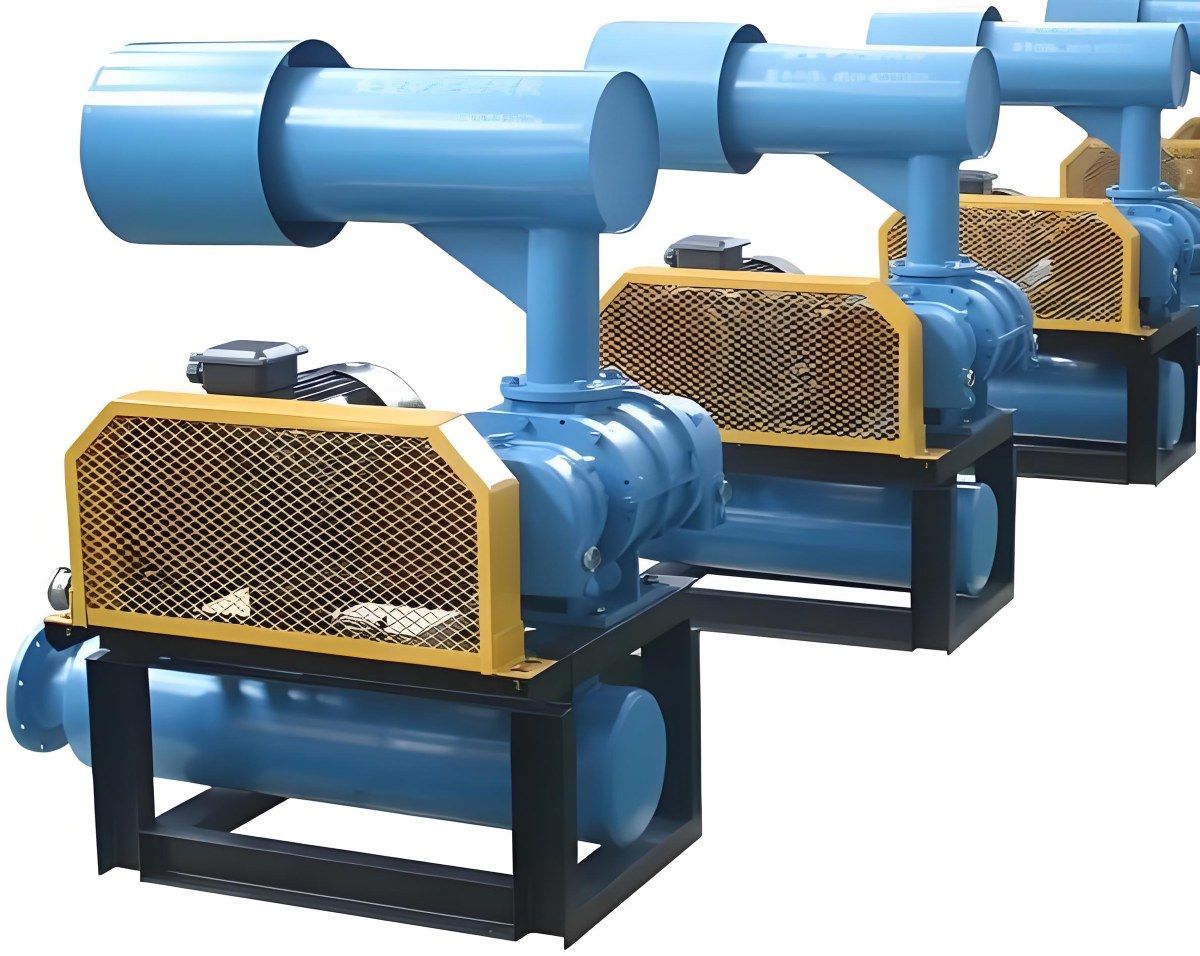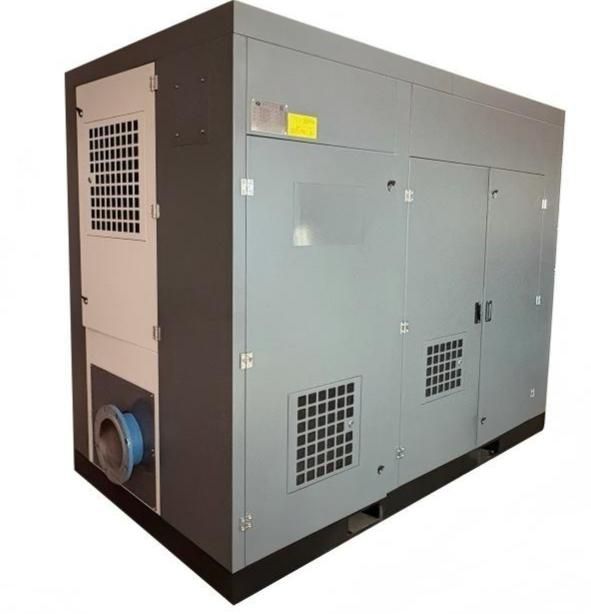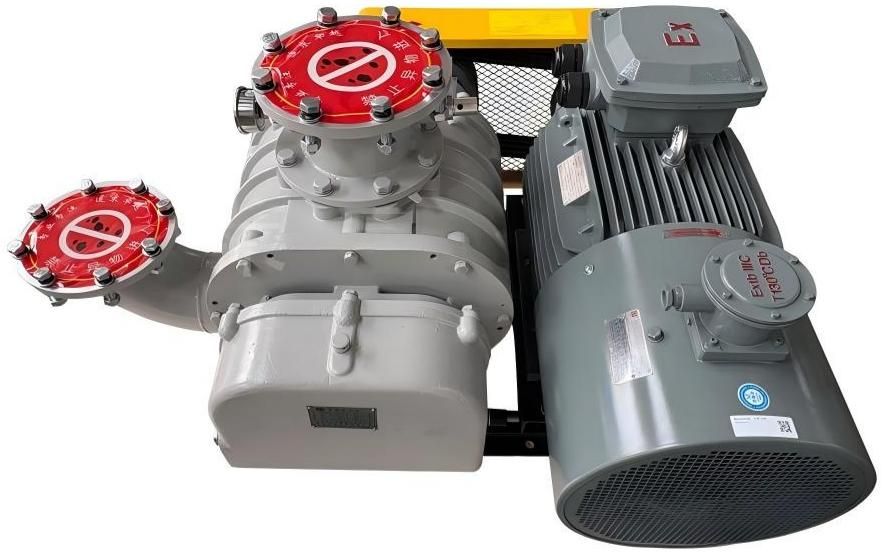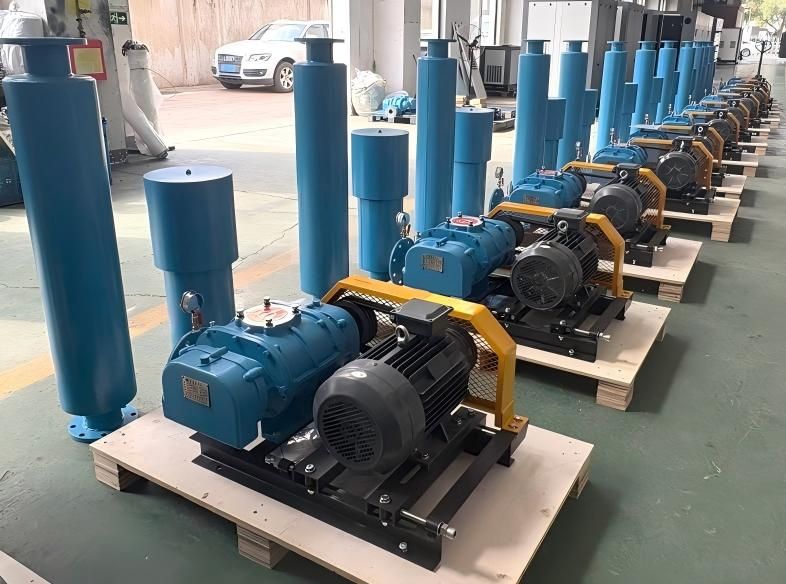

The modular Roots blower (also referred to as an integrated or unit-type Roots blower) is a complete, plug-and-play air delivery system — not merely an isolated blower unit. It integrates the Roots blower main unit, motor, inlet silencer, outlet silencer, safety valve, check valve, flexible joint, pressure gauge, shock absorber, and all necessary components onto a single common base.
After installation, users only need to connect the power supply and piping to begin operation, greatly simplifying the commissioning process. If the Roots blower main unit is the "engine," the modular Roots blower is the "complete vehicle" — ready to run out of the box.
The modular Roots blower employs positive displacement technology with a pair of precision-machined three-lobe rotors rotating in opposite directions within the pump chamber:
| Type | Positive Displacement Roots Type, Three Lobes |
| Supply capacity | 100 sets per month |
| Delivery time | 5-25 days depending on quantity and specifications |
| Packing | export wood packing |
| Certificate | ISO9001/ISO14001/CE |
| Capacity | 1-200m3/min |
| Pressure | 9.8-100kpa |
| Power | 1.5KW-350KW |
| Rotary speed | 1100-2300rpm |
| Motor Power supply | 220/380/400/415/440V, single phase/three phase, 50/60HZ |
| Motor | optional |
| Sound proof enclosure | optional |
A modular Roots blower is a type of positive displacement blower that utilizes two or more rotors, or lobes, to move and compress air or gas. The design is modular, meaning it can be assembled with various components to suit specific requirements in terms of flow rate and pressure. These blowers work by trapping a volume of air or gas between the rotors and the casing, then moving it from the intake to the discharge side of the blower. As the lobes rotate, they create a vacuum effect that pulls the gas into the blower, and as the gas moves through, it is compressed and pushed out under pressure. This makes them highly efficient and reliable for a range of applications, including aeration, pneumatic conveying, and vacuum processes.
Yes, modular Roots blowers are highly customizable to meet the specific needs of various industrial applications. The modular design allows for adjustments in the blower's configuration, such as the number of lobes, the size, and the materials used in its construction. Additionally, features like cooling systems, filters, and silencers can be added or modified depending on the operational environment and the specific requirements of the process, whether it's for waste water treatment, chemical processing, or food and beverage production. This flexibility ensures optimal performance and efficiency for each application.
Maintenance of a modular Roots blower involves several key tasks to ensure its longevity and performance. Regular checks should be made on the oil levels and quality, as well as the condition of the oil filter. The belts, if equipped, should be inspected for wear and proper tension. Cleaning the air intake filter is crucial to prevent dust and debris from entering the system, which can cause damage. Additionally, periodic inspection of the rotors and seals for wear is important, as these components must operate with very precise clearances to function effectively. Following the manufacturer’s recommended maintenance schedule and using qualified technicians can help minimize downtime and keep the blower running smoothly.
Modular Roots blowers are generally known for their robust performance and reliability, especially in high-volume, low-pressure applications. However, in terms of energy efficiency, they may not always be the most efficient compared to other types of blowers like centrifugal or screw compressors, particularly at higher pressures. Roots blowers have a relatively constant efficiency curve and are best suited for applications where the flow rate remains fairly constant. For processes that require variable pressures or flow rates, other blower types might offer better energy efficiency. However, advancements in technology and design have led to improvements in the energy efficiency of Roots blowers, making them a viable option for a wider range of applications.
Common signs that a modular Roots blower might be malfunctioning include unusual noises such as knocking or grinding, which can indicate worn or misaligned parts. Increased vibration or movement of the blower during operation can also suggest issues with the internal components or improper installation. Another sign is a decrease in performance, such as reduced airflow or pressure, which may be due to leaks, clogs in the air intake, or worn seals. Higher than normal temperature readings and excessive oil consumption can point to cooling system issues or problems with the internal lubrication. Regular monitoring and maintenance can help identify and address these issues before they lead to more serious problems.
© 2026 Torvexus. All Rights Reserved.
Loading...