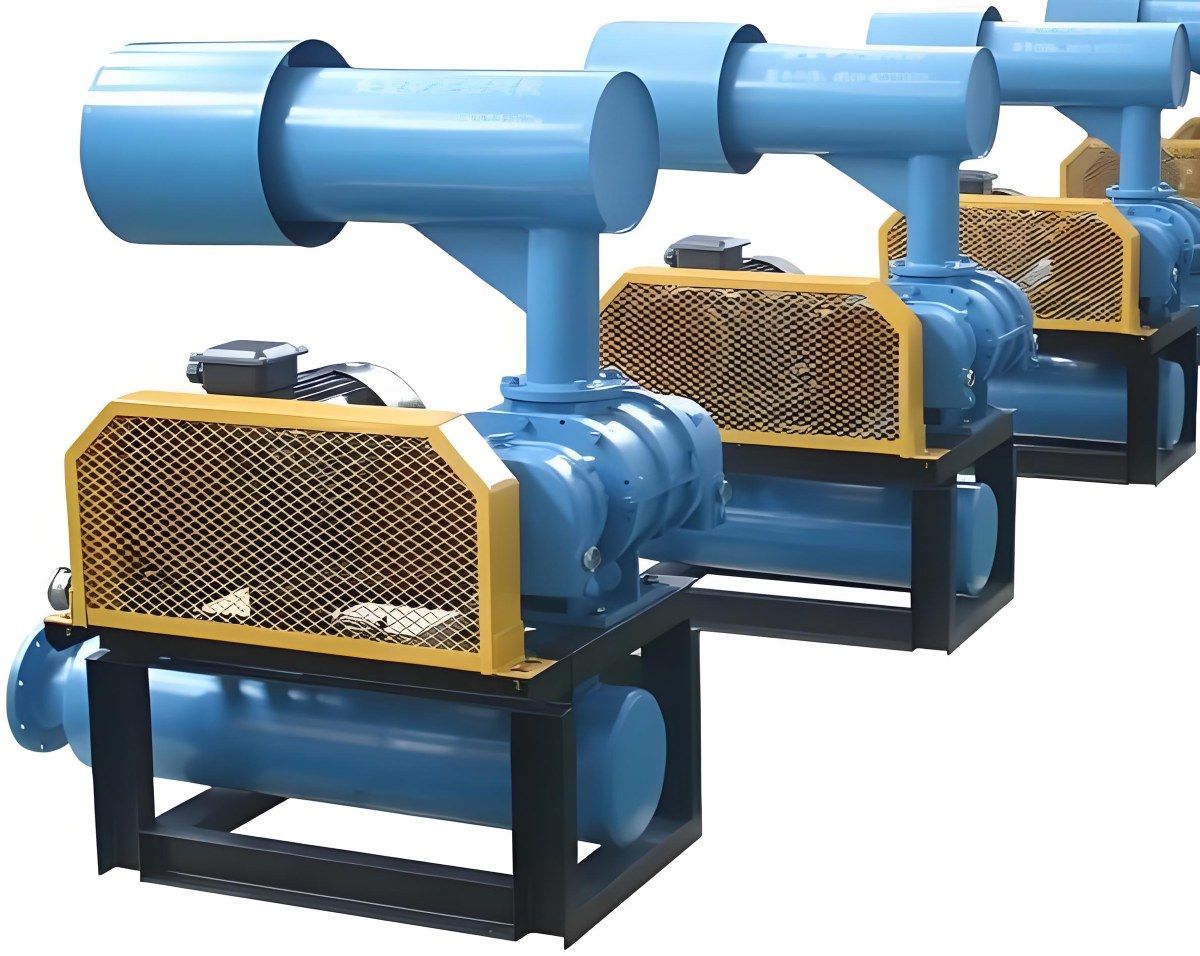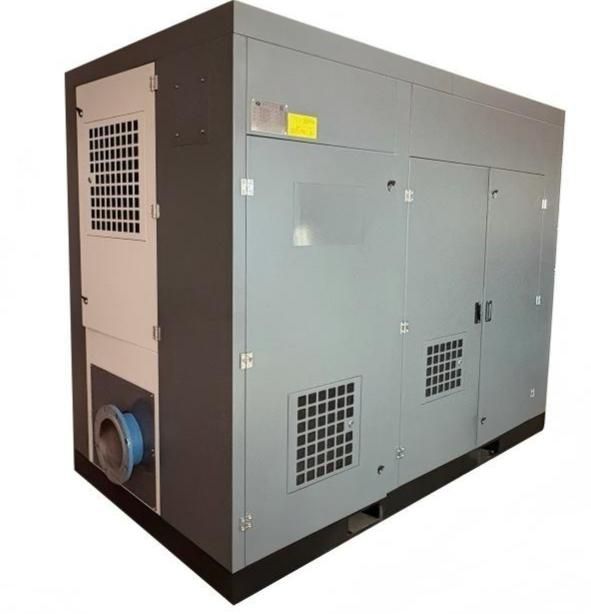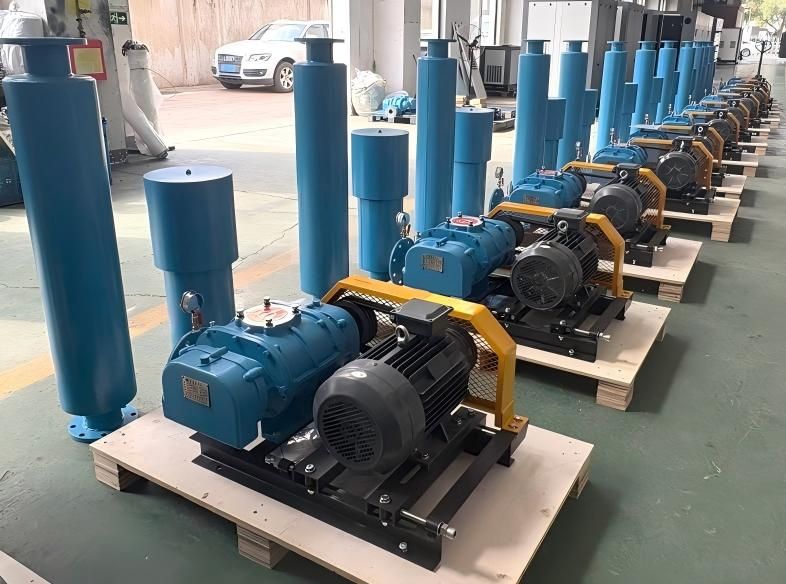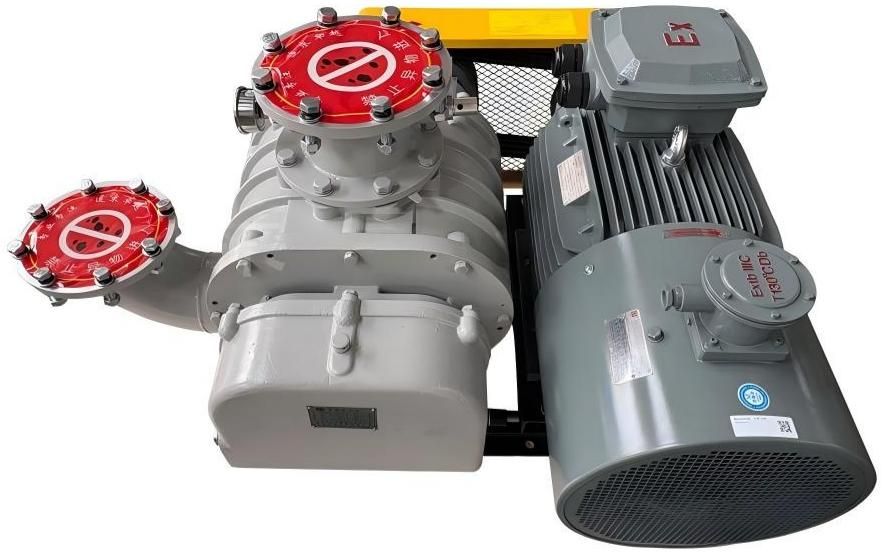

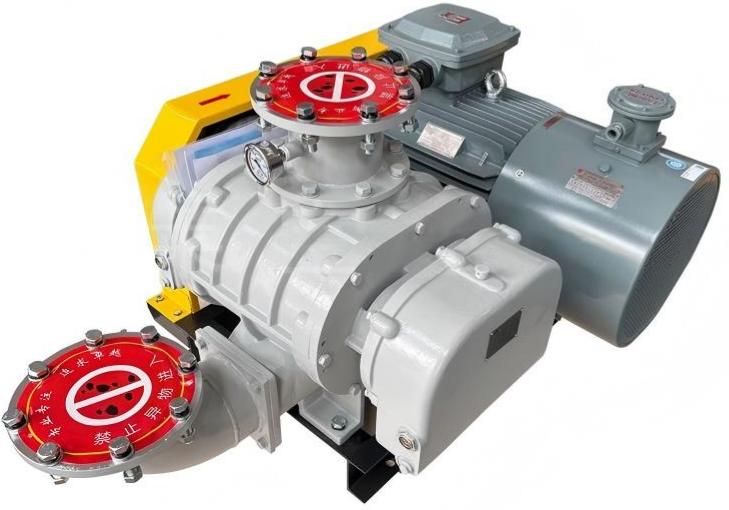
The air-cooled negative pressure Roots blower (also known as an air-cooled Roots vacuum pump) is a positive displacement rotary machine designed to create vacuum environments in industrial systems. Combining the inherent durability of Roots blower technology with the simplicity of air-cooling, it delivers oil-free, pulsation-free suction for a wide range of industrial vacuum applications without the complexity of water-cooled systems.
| Supply capacity | 100 sets per month |
| Delivery time | 5-25 days depending on quantity and specifications |
| Packing | export wood packing |
| Certificate | ISO9001/ISO14001/CE |
| Capacity | 1-250m3/min |
| Pressure | 0~-50 kpa |
| Power | 1.5KW-355KW |
| Motor Power supply | 220/380/400/415/440V, single phase/three phase, 50/60HZ |
| Motor | optional |
| Sound proof enclosure | optional |
A Roots blower, also known as a Roots pump, is primarily used in vacuum applications to increase the pumping speed and efficiency at low vacuum levels. It is not a primary pump but rather a booster that works in conjunction with other vacuum pumps, such as oil-sealed rotary vane pumps or dry pumps, to achieve higher vacuum levels. The Roots blower compresses the gas before it reaches the primary pump, allowing for faster evacuation of gases and a more efficient process.
A Roots blower operates by using two figure-eight shaped rotors that rotate in opposite directions without touching each other, inside a housing. As the rotors turn, they trap a volume of gas between the rotor and the housing, which is then transported from the intake side to the exhaust side. When used in vacuum applications, the Roots blower is typically placed between the chamber being evacuated and the backing pump. The blower increases the gas throughput and reduces the time required to reach the desired vacuum level, but it does not create a vacuum on its own. It relies on the backing pump to maintain the necessary pressure difference.
Roots blowers are widely used in various industries for vacuum applications, including semiconductor manufacturing, where they assist in creating the vacuum environment needed for processes such as sputtering and chemical vapor deposition. They are also used in chemical and pharmaceutical industries for processes like distillation, drying, and vacuum filtration. Additionally, Roots blowers are found in food processing (e.g., freeze drying and vacuum packaging), paper manufacturing (for creating vacuums in the paper-making process), and in scientific research for applications requiring high vacuum levels.
The advantages of using a Roots blower in a vacuum system include its ability to handle high gas loads, high throughput, and low power consumption relative to the volume of gas it can move. Roots blowers can also operate over a wide range of pressures, making them versatile for different applications. They are oil-free, which means they do not contaminate the process, and they can significantly reduce the time needed to achieve the desired vacuum level when used in conjunction with other pumps. Furthermore, their maintenance requirements are generally lower compared to other types of vacuum pumps.
Regular maintenance of a Roots blower used in vacuum applications is essential to ensure its performance and longevity. Key maintenance tasks include checking the blower's alignment and clearance between the rotors and the housing, as well as inspecting the wear of the rotors. It is also important to regularly change the oil in the gear box and check the seals to prevent leaks. Additionally, cleaning the intake and exhaust ports to remove any buildup is recommended. Monitoring the blower's temperature and vibration levels can help identify potential issues before they become severe. Scheduled maintenance and adherence to the manufacturer's guidelines are crucial for maintaining the efficiency and reliability of the Roots blower.
© 2026 Torvexus. All Rights Reserved.
Loading...