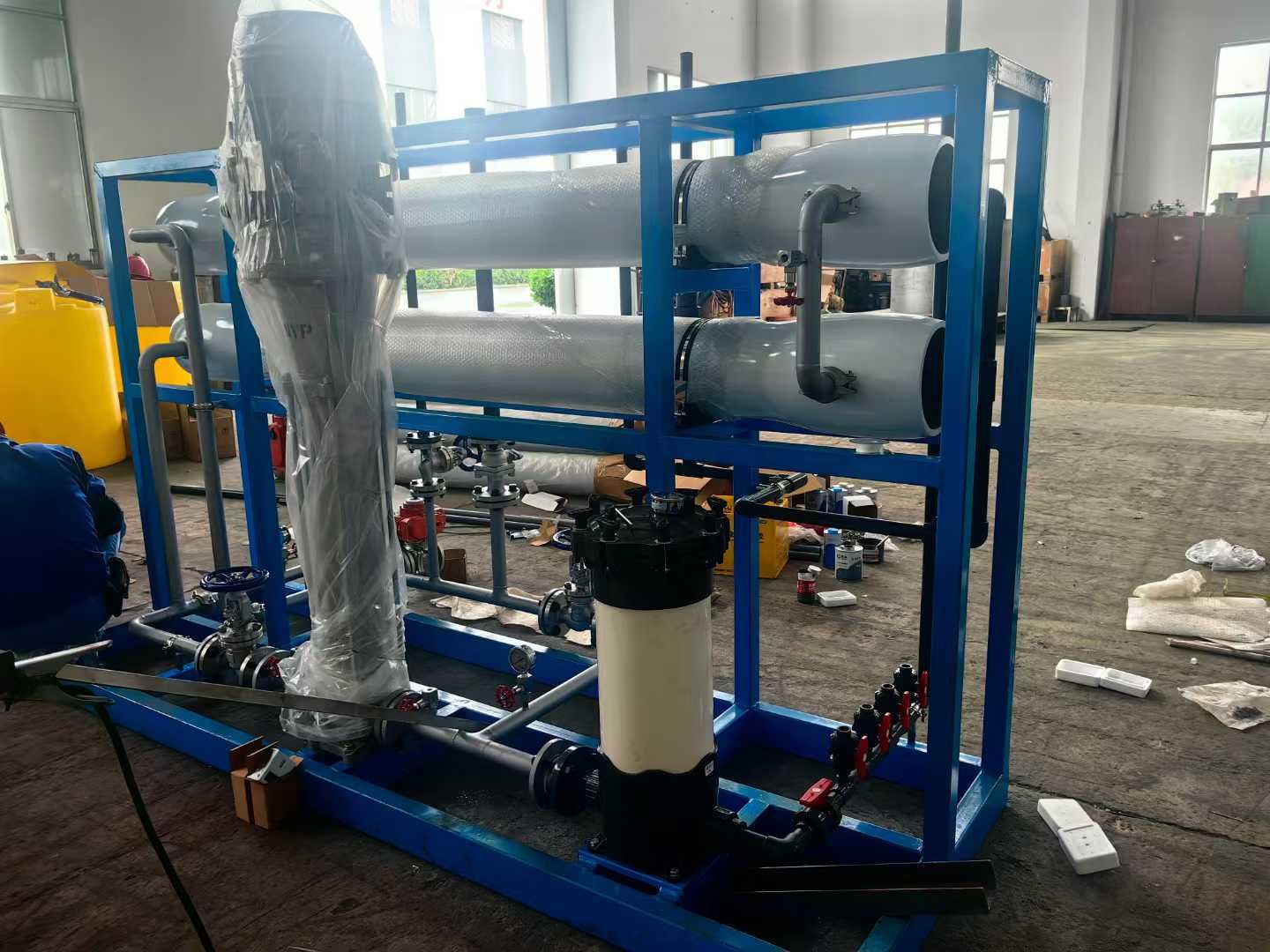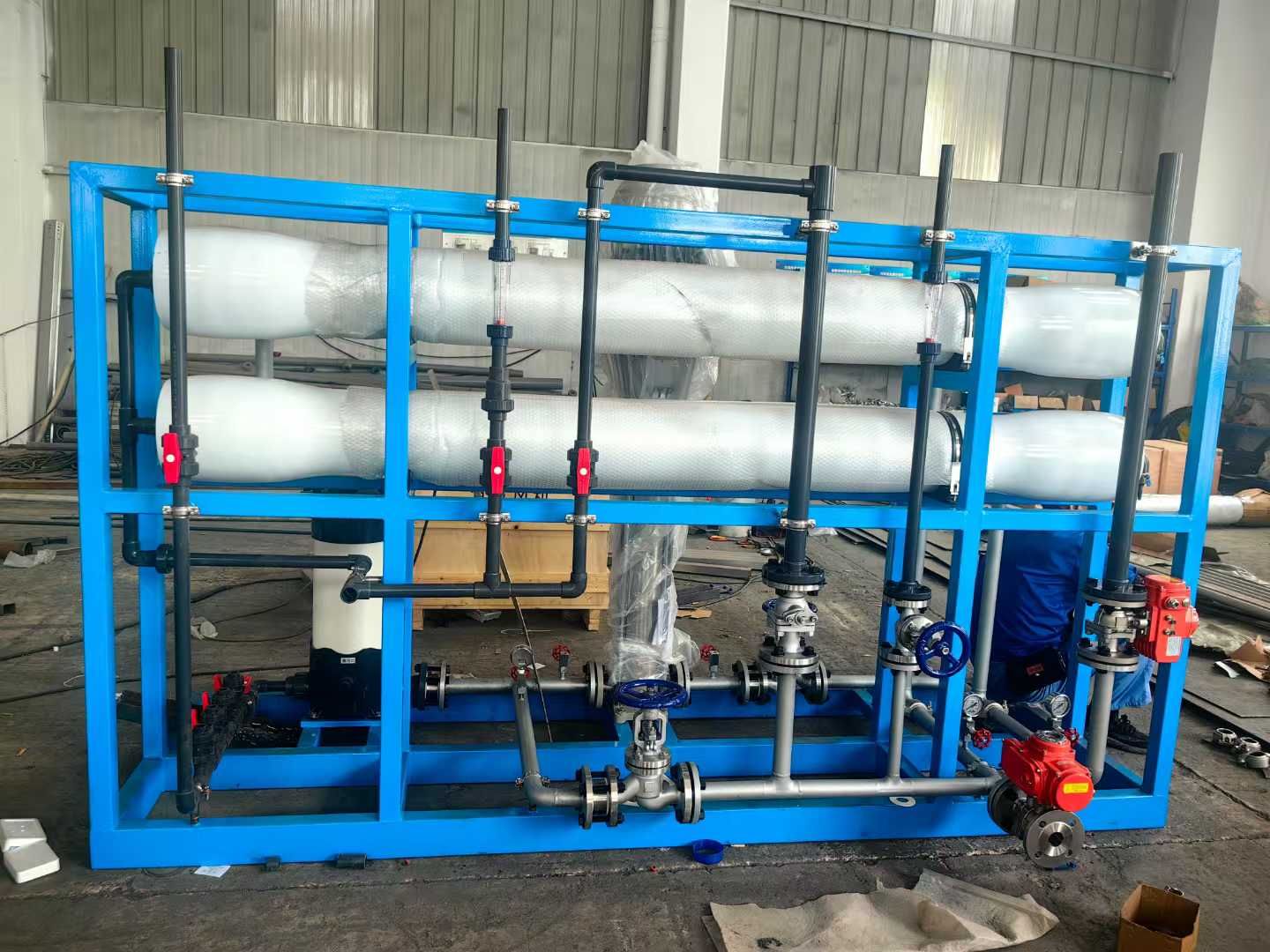
High-Pressure Reverse Osmosis (HPRO) Concentrate Reduction System
Project Background
In many industrial wastewater treatment systems, conventional reverse osmosis (RO) achieves 70–80% water recovery, leaving 20–30% of the feed volume as concentrate. This concentrate — rich in dissolved salts, organics, and scaling ions — must be further treated or disposed of, often through costly thermal evaporation or mechanical vapor recompression (MVR).
High-Pressure Reverse Osmosis (HPRO) bridges the gap between standard RO and thermal processes by pushing operating pressure to 80–120 bar, extracting an additional 50–70% of water from RO concentrate and dramatically reducing the volume that requires evaporation.
Torvexus designs and manufactures complete skid-mounted HPRO systems for concentrate reduction in zero liquid discharge (ZLD) and near-ZLD applications.
The Concentrate Problem
Without HPRO, a typical treatment plant faces a difficult choice:
- Evaporation: Energy-intensive and expensive — thermal evaporation costs 5–10× more per cubic meter than membrane treatment
- Evaporation ponds: Require large land area, environmental risk, and are increasingly restricted by regulations
- Deep well injection: Limited availability, regulatory barriers, and long-term liability
HPRO reduces the concentrate volume by 50–70%, cutting evaporation costs proportionally and making ZLD economically viable for many applications.
System Design
Key Specifications
| Parameter | Value |
|---|---|
| Feed water | RO concentrate (TDS 15,000–60,000 mg/L) |
| Operating pressure | 80–120 bar |
| Recovery rate | 50–70% (from RO concentrate) |
| Membrane type | High-pressure disc tube RO (DTRO) or spiral-wound HPRO |
| Construction | Skid-mounted, pre-assembled and factory-tested |
| High-pressure pump | Positive displacement plunger pump, SS316L |
| Energy recovery | Integrated energy recovery device (ERD) for pressure exchange |
| Control system | PLC + HMI with VFD-controlled pump speed |
| Frame | Carbon steel with anti-corrosion coating / SS304 optional |
Process Flow
- Feed conditioning: RO concentrate is pH-adjusted and dosed with antiscalant to prevent CaSO₄, BaSO₄, and silica scaling at high concentration factors
- Cartridge filtration: 5μm security filter protects high-pressure pump and membranes
- High-pressure pumping: Plunger pump pressurizes feed to 80–120 bar with VFD speed control for precise pressure regulation
- HPRO membrane separation: Concentrate is further dewatered, producing clean permeate and reduced-volume final concentrate
- Energy recovery: ERD captures hydraulic energy from the concentrate stream, reducing power consumption by 30–40%
- Permeate blending: HPRO permeate is combined with upstream RO permeate for final use or discharge
Design Highlights
- Extreme pressure capability: All components rated for 120 bar continuous operation — high-pressure piping, fittings, and instrumentation selected for long-term reliability
- Energy efficiency: Integrated energy recovery device reduces specific energy consumption to 4–6 kWh/m³ permeate, compared to 15–25 kWh/m³ for thermal evaporation
- Anti-scaling design: Advanced antiscalant dosing with real-time monitoring of scaling indicators (LSI, S&DSI) to prevent membrane fouling at high concentration factors
- Compact footprint: Complete system on a single skid — pump, membranes, ERD, chemical dosing, and controls — ready for plug-and-play installation
- Flexible membrane selection: System compatible with both DTRO disc membranes (for high-fouling feed) and spiral-wound HPRO elements (for cleaner feed)
Performance Comparison
| Parameter | Without HPRO | With HPRO |
|---|---|---|
| Overall system recovery | 70–80% | 90–95% |
| Concentrate volume for evaporation | 20–30% of feed | 5–10% of feed |
| Evaporation energy cost | 100% (baseline) | 30–50% (reduced) |
| Total treatment cost | Higher (large evaporator needed) | Lower (smaller evaporator + HPRO) |
| Evaporator capacity required | Full size | 50–70% smaller |
Application Scenarios
- ZLD projects: HPRO as the intermediate step between standard RO and crystallizer/evaporator, reducing thermal load by 50–70%
- Landfill leachate: Concentrate from DTRO first-stage further processed by HPRO to minimize concentrate volume for return to landfill or incineration
- Industrial brine concentration: Chemical plants, power plant FGD wastewater, textile dyeing wastewater — any application with high-TDS RO concentrate
- Retrofit upgrade: Add HPRO to existing RO systems to boost overall recovery without replacing the primary RO system
Conclusion
High-Pressure Reverse Osmosis is the most cost-effective technology for bridging the gap between conventional RO and thermal evaporation. By recovering an additional 50–70% of water from RO concentrate, HPRO dramatically reduces the volume and cost of final concentrate disposal.
Torvexus HPRO systems are delivered as complete, factory-tested skid units ready for rapid deployment. Contact us for system sizing and project-specific engineering support.