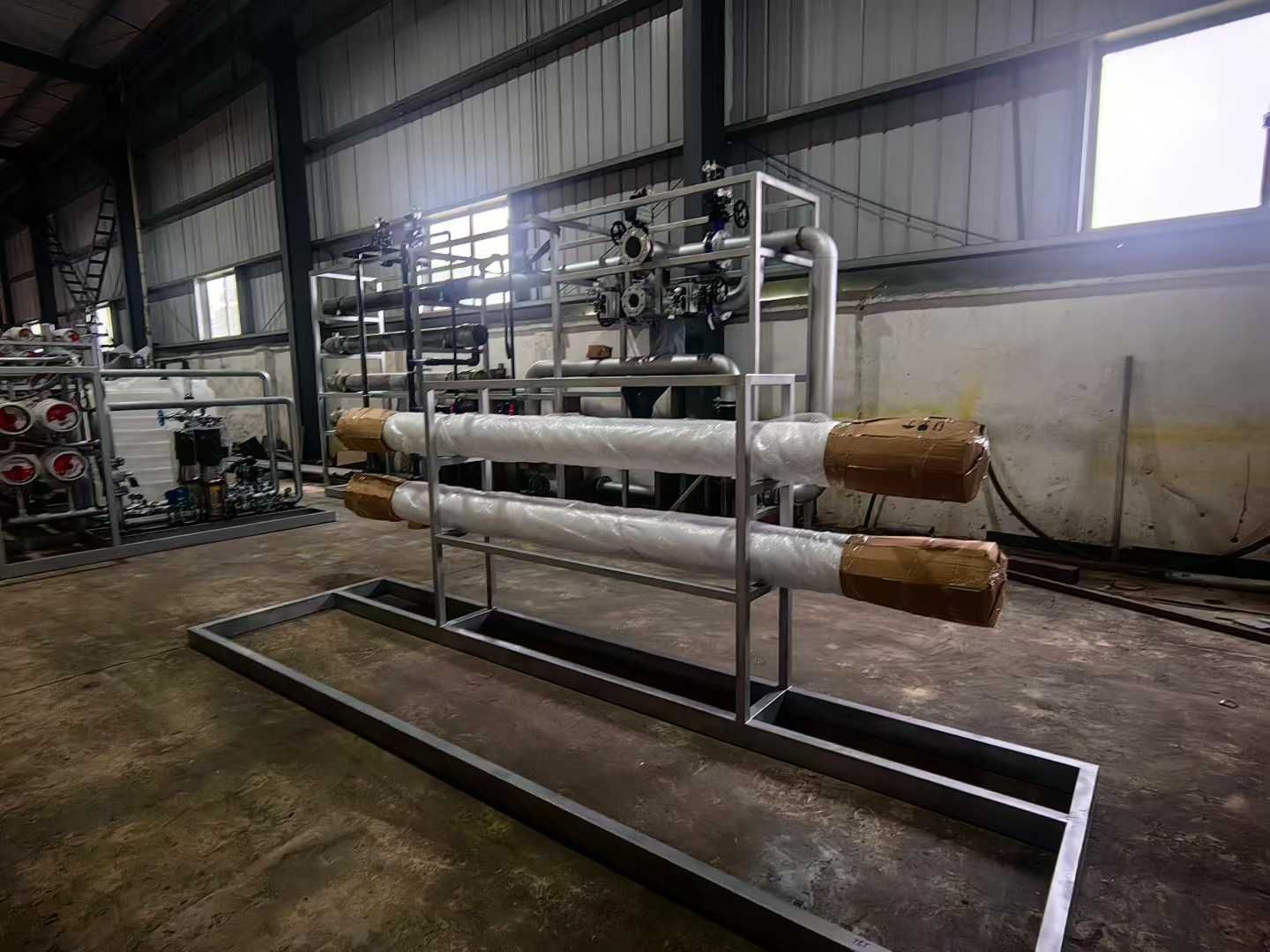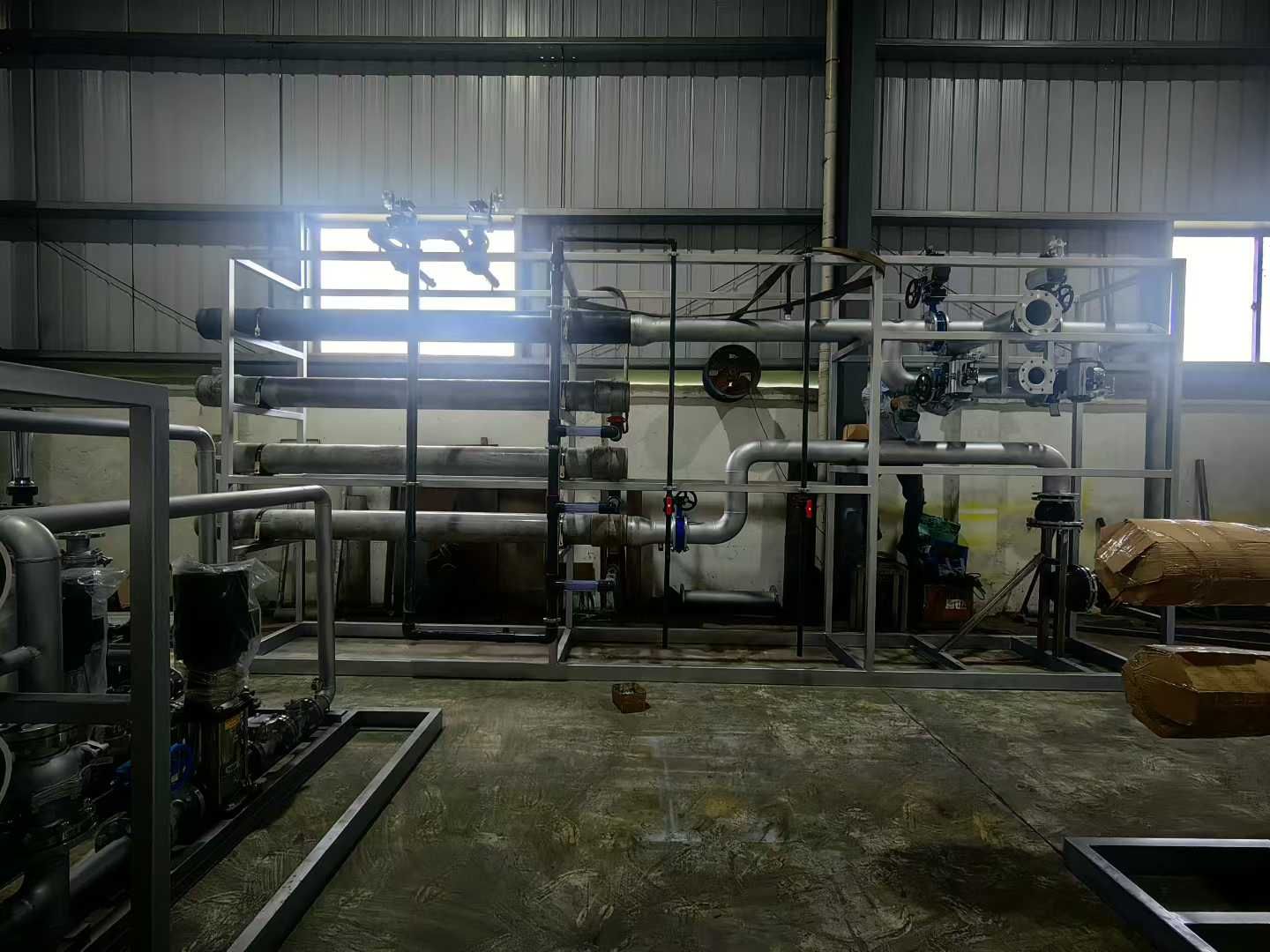
Mine Water Treatment System – Tubular UF, Nanofiltration, RO and High-Pressure RO
Project Background
Coal mine drainage water contains high levels of suspended solids, dissolved salts, sulfates, and heavy metals. Increasingly strict environmental regulations require mine operators to treat and recycle mine water rather than discharge it directly. This project required a complete treatment system capable of producing reusable process water while minimizing concentrate volume for zero liquid discharge (ZLD).
Torvexus designed and supplied a four-stage membrane treatment system combining tubular UF, nanofiltration (NF), reverse osmosis (RO), and high-pressure reverse osmosis (HPRO) for a coal mine operation.
Feed Water Characteristics
- TDS: 8,000–15,000 mg/L
- Sulfate (SO₄²⁻): 3,000–6,000 mg/L
- Suspended solids: 200–500 mg/L (coal fines and mineral particles)
- Hardness: 1,500–3,000 mg/L as CaCO₃
- Iron (Fe): 10–50 mg/L
- Manganese (Mn): 5–20 mg/L
- pH: 6.0–7.5
System Design
The four-stage membrane process is designed to progressively remove contaminants while maximizing water recovery:
Process Flow
- Stage 1 – Tubular Ultrafiltration (UF): Removes suspended solids, coal fines, iron/manganese precipitates, and colloidal matter. Tubular configuration handles high-SS feed without clogging.
- Stage 2 – Nanofiltration (NF): Selectively removes divalent ions (Ca²⁺, Mg²⁺, SO₄²⁻) and hardness while allowing monovalent ions to pass. Reduces scaling potential for downstream RO.
- Stage 3 – Reverse Osmosis (RO): Standard RO desalination of NF permeate, producing high-quality process water with TDS < 200 mg/L.
- Stage 4 – High-Pressure RO (HPRO): Concentrates the combined NF and RO reject streams to minimize final concentrate volume. Operating pressure up to 100 bar.
Key Specifications
| Parameter | Value |
|---|---|
| Design Capacity | 200 ton/day feed water |
| Tubular UF | PVDF tubular membrane, 0.03 μm |
| Nanofiltration | NF270 spiral-wound elements |
| RO | BW30 brackish water RO elements |
| High-Pressure RO | DTRO disc tube modules, rated to 120 bar |
| Overall Water Recovery | > 90% |
| Permeate TDS | < 200 mg/L |
| Final Concentrate TDS | > 80,000 mg/L (for evaporation/crystallization) |
Why Four-Stage Membrane for Mine Water?
Mine water treatment requires a staged approach because of the complex water chemistry:
- Tubular UF first: Mine water contains abrasive coal fines and iron precipitates that would destroy conventional hollow-fiber membranes. Tubular UF with large flow channels handles this reliably.
- NF for selective separation: Nanofiltration removes sulfate and hardness ions that cause severe scaling in RO systems, while passing through lower-risk monovalent ions — reducing RO operating pressure and chemical consumption.
- RO for final polishing: Produces reusable process water quality from the softened NF permeate.
- HPRO for volume reduction: High-pressure DTRO concentrates reject streams to > 80,000 mg/L TDS, minimizing the volume sent to evaporation — dramatically reducing energy costs for ZLD.
Performance Results
- Water recovery: 92% overall — from 200 ton/day feed to 184 ton/day reusable water
- Sulfate removal: > 99% (from 5,000 mg/L to < 50 mg/L in permeate)
- Iron/Manganese: Non-detectable in UF permeate
- Concentrate volume: Reduced to < 16 ton/day at > 80,000 mg/L TDS
- Operating cost: 40% lower than direct evaporation of raw mine water
Conclusion
The four-stage membrane approach provides the most cost-effective path to zero liquid discharge for mine water treatment. By progressively removing contaminants at each stage, the system maximizes water recovery while minimizing the volume and cost of final concentrate disposal. Torvexus provides complete system design, equipment supply, and commissioning support for mine water treatment projects of all scales.